Hammer Nutrition Blog

L-Carnitine – Is it good or bad for your heart?

Posted by cvanloan on 04/09/2013 in News | No Comments »

Recently, there has been some negative press on l-carnitine in the news. In a nutshell, the results of this study, published online in the journal Nature Medicine, suggest that orally dosed l-carnitine is metabolized by intestinal bacteria to produce a substance called trimethylamine (TMA), which is further metabolized into trimethylamine-N-oxide (TMAO). It is theorized that TMAO prevents of excess cholesterol from being excreted, thus allowing it to infiltrate artery walls, which is being studied as a possible culprit for increased risk of cardiovascular disease.

Sounds a bit scary, doesn’t it? But does that mean that l-carnitine supplementation puts you at risk? Let’s take a closer look at l-carnitine in general, and this recent study and its implications.

First, however, it’s important to keep in mind the axiom, “If a little is good, a lot is not necessarily better.” Even the basic substances required for life can be overdosed or under-dosed, contributing to harmful life-threatening consequences. Examples of excess or depletion extremes are water, sodium, and carbohydrate substances:

  • Water depletion/dehydration can kill you, but too much water (“water Intoxication”) is also lethal.
  • Too little sodium is known as hyponatremia, a life-threatening emergency. Too much sodium results in hypernatremia, which also has potentially fatal consequences.
  • Too much sugar or carbohydrates has been associated with diabetic issues, yet when the blood glucose turnover is excessive, consuming carbohydrates during exercise is safe and recommended.

Essential for athletic performance, heart health, and more

L-carnitine is a natural substance found in food; however, it is not considered an essential nutrient because the body can make it from the amino acids lysine and methionine. L-carnitine is the nutrient that transports fatty acids to the mitochondria for use as a fuel source, and research shows that muscle carnitine levels are rapidly depleted during exercise, even moderate exercise.

A number of published studies on athletes have shown that l-carnitine supplementation supports exercise performance. Athletes have a requirement for more carnitine than they are capable of producing endogenously (inside the body). L-carnitine may be particularly important during periods of intense exercise as it may help to reduce post-exercise lactic acid accumulation and may increase maximal work output. It may also preserve muscle glycogen levels during exercise.

As reported in the majority of studies, an increase in maximal oxygen consumption and a lowering of the respiratory quotient indicate that dietary l-carnitine has the potential to stimulate lipid metabolism (e.g. the utilization of fatty acids for fuel). Treatment with l-carnitine has also been shown to induce a significant post-exercise decrease in plasma lactate, which is formed and used continuously under fully aerobic conditions. Data from preliminary studies have indicated that l-carnitine supplementation can attenuate the deleterious effects of hypoxic (low oxygen) training and speed up recovery from exercise stress. Recent data have indicated that l-carnitine plays a decisive role in the prevention of cellular damage and favorably affects recovery from exercise stress. [1-7]

Additionally, among its other benefits for brain, body composition, and mitochondrial health, l-carnitine is essential for normal heart function. [8, 9]


So what does this particular study mean for me?

While this study is certainly intriguing, it’s important to keep in mind that the study subjects—both humans and mice—were given “chronic” amounts of l-carnitine. While we do not know how much was given to these test subjects, previous research done on humans suggests that a very large amount of l-carnitine—2 grams, three times daily (6 grams total/day)—is required for significant increases of plasma TMAO. Other dosages (0.0g, 0.5g, and 1.0g) administered three times daily—a total of 0.0g, 1.5g, and 3g total per day—showed no change in plasma increases of TMAO.

REFERENCE: Bain MA, Milne RW, Evans AM. J Clin Pharmacol. 2006 Oct;46(10):1163-70. Disposition and metabolite kinetics of oral L-carnitine in humans. Sansom Institute, School of Pharmacy and Medical Sciences, University of South Australia, Adelaide, SA 5000, Australia.

Conclusion

Athletes can safely consume l-carnitine in supplement form to justify replacement. If you are consuming supplemental l-carnitine, we recommend keeping your totals in the range of 2000 mg (2g) per day. A non-athlete who consumes large amounts of meats that contain l-carnitine does not need to supplement this substance. Animal meat not only generates bodily carnitine increases, it also generates a protein structure that drives weight gain, growth factors, and plaque formation. If not derived from naturally raised grass-fed animals, there are other harmful substances found in meats that over time may prove harmful to health. Overall, we recommend not overconsuming substances from the animal kingdom that drive cholesterol accumulation on artery walls.

L-carnitine levels in foods (per 100 grams)

  • Lamb – 190 mg
  • Beef – 94 – 145 mg
  • Pork – 28 mg
  • Poultry and Seafood – 1.6 – 6.4 mg

L-carnitine in Hammer Nutrition products

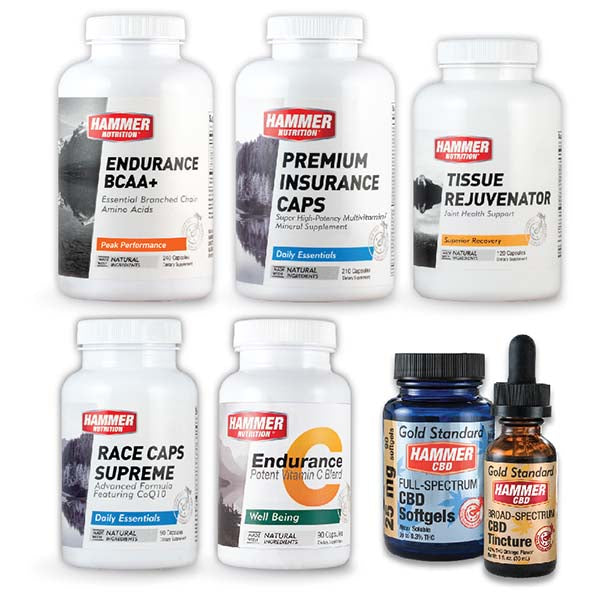
  • Mito Caps – 125 mg/capsule
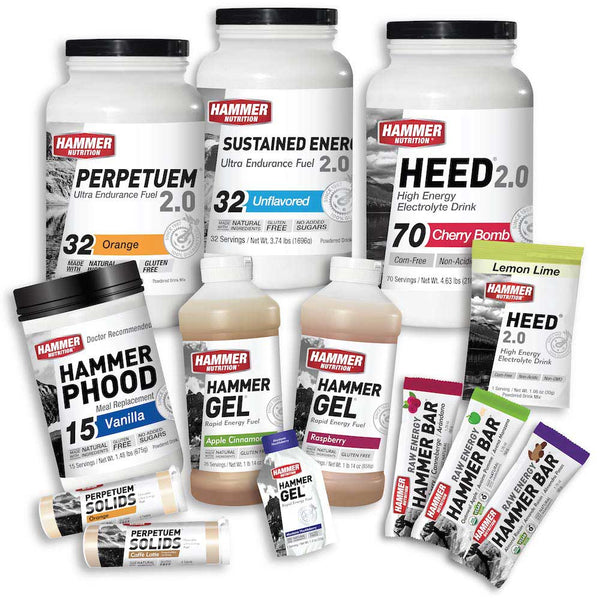
  • Perpetuem – 25 mg/scoop
  • Perpetuem Solids – 6 mg/tablet
  • Sustained Energy – 16.6 mg/scoop


REFERENCES:

1. Brass, E. P., et al.  The role of carnitine and carnitine supplementation during exercise in man and in individuals with special needs.  J Am Coll Nutr.  17:207-215, 1998.

2. Dragan, I. G., et al.  Studies concerning the ergogenic value of protein supply and l-carnitine in elite junior cyclists. Physiologie.  25(3):129-132, 1988.

3. Cerretelli, P., et al.  L-carnitine supplementation in humans. The effects on physical performance.  Int J Sports Med.  11(1):1-14, 1990.

4. Karlic, H., et al.  Supplementation of l-carnitine in athletes: does it make sense?  Nutrition.  20(7-8):709-715, 2004.

5. Lancha, A., et al.  Effect of aspartate, asparagine, and carnitine supplementation in the diet and metabolism of skeletal muscle during moderate exercise.  Physiol Behav.  57(2):367-371, 1995.

6. Lennon, D. L. F., et al.  Effects of acute moderate-intensity exercise on carnitine metabolism in men and women. J Applied Physiology.  55:489, 1983.

7. Siliprandi, N., et al.  Metabolic changes induced by maximal exercise in human subjects following L-carnitine administration. Biochem Biophys Acta. 1034(1):17-21, 1990.

8. Chao HH, Chen CH, Liu JC, Lin JW, Wong KL, Cheng TH. L-Carnitine attenuates angiotensin II-induced proliferation of cardiac fibroblasts: role of NADPH oxidase inhibition and decreased sphingosine-1-phosphate generation. J Nutr Biochem. 2010 Jul;21(7):580-8.

9. Gomez LA, Heath SH, Hagen TM. Acetyl-L-carnitine supplementation reverses the age-related decline in carnitine palmitoyltransferase 1 (CPT1) activity in interfibrillar mitochondria without changing the L-carnitine content in the rat heart. Mech Ageing Dev. 2012 Feb-Mar;133(2-3):99-106.

Share:
  • email
  • Facebook
  • Twitter
  • Google Bookmarks
  • Digg
  • StumbleUpon
  • del.icio.us
  • MySpace

Just in from Missoula, the Hammer Nutrition Missoula XC is a go this July!

Posted by pgrove on 03/16/2012 in News | 1 Comment »

Photo credit Tom Robertson, tomrobertsonphoto.com

It’s not often that a national caliber event (of any sport) takes place in Montana, so when they do it creates quite a stir. Last spring when some core Missoula mountain bikers told us they we’re putting on a brand new mountain bike race, and that it was part of the US Pro XCT, our reactions included a range between “Really?!” and “Awesome!”. We sponsored the event site unseen with Hammer Gel, HEED and Recoverite last summer and the race blew away all expectations. Over a thousand spectators came out to watch the main event, and celebrate the sport of mountain biking in Missoula, Montana, which sits only a couple hours . So a couple weeks ago when the opportunity presented itself for Hammer Nutrition to become the title sponsor of the Missoula XC, we just couldn’t say no! We’re happy to help bring national level mountain biking to Montana, and showcase our great products alongside the sports elite. Here’s a few words from the Missoula XC technical director, Ben Horan, about just how special this race is becoming:

Inspired by the success of the internationally acclaimed Missoula Marathon, the Hammer Nutrition Missoula Pro XCT was conceived of and implemented by a passionate core of cycling and community activists who share a love of cycling and of the community. The race is an event that provides a super venue for pros, rallies amateurs from the region, and brings a great event to a great town. It’s about having fun and involving as many different people as possible.

The Hammer Nutrition Missoula XC race course received rave reviews from professional racers and amateurs alike, and was designed and constructed specifically for this event. It reflects the contemporary World Cup course philosophy. Steep, technical climbs and descents alternate between single track, double track, and infrequent dirt road sections. Frequent and sudden rhythm changes challenge racers, but several sequences of fast and fun sections are included as well. The course features over 850 feet of climbing per lap; while it is not at extremely high altitude, multiple long, steep climbs per lap test racers’ fitness limits.

In 2011, hometown favorite Sam Schultz snagged the win over teammate Jeremy Horgan-Kobelski and Pro XCT Series winner, Max Plaxton, while Lea Davidson put on a clinic to win her first Pro XCT race ahead of Heather Irmiger and Katerina Nash. With this race as the final domestic test before the Olympics in London, and newly donning UCI C1 credentials all of the heavy hitters are sure to turn up with guns blazing. Come on out to test your mettle on the same tread as Olympians, or just have a cold Kettlehouse beer and cheer on your friends on July 14, 2012 at the Hammer Nutrition Missoula XC.


Share:
  • email
  • Facebook
  • Twitter
  • Google Bookmarks
  • Digg
  • StumbleUpon
  • del.icio.us
  • MySpace

2011 Race Across America (RAAM)

Posted by cvanloan on 06/27/2011 in News | 1 Comment »

The 2011 Race Across America (RAAM), an event that Hammer Nutrition has been a major sponsor of for many years, is in the books and we want to congratulate all of the competitors for their tremendous effort in “The World’s Toughest Bicycle Race.”   Continue Reading »

Share:
  • email
  • Facebook
  • Twitter
  • Google Bookmarks
  • Digg
  • StumbleUpon
  • del.icio.us
  • MySpace

Another Win in Baja for Team Pulsar Construction/Hammer Nutrition

Posted by pgrove on 03/18/2011 in News | No Comments »

Team Pulsar Construction/ Hammer Nutrition at the Tecate SCORE San Felipe 250

Simi Valley, CA – Along the narrow loop extending from San Felipe, Mexico, adjacent to the Sea of Cortez, the world’s fastest gather to tackle the tough terrain to the finish line. Nearly 250 entries gather to compete over 250 miles of desert racing along a course that is considered, “The Best of Baja.” In a race filled with silt, jagged rocks, narrow passes between walls of rock, and sections of shattering speed, only the world’s finest find themselves up front at the finish. Continue Reading »

Share:
  • email
  • Facebook
  • Twitter
  • Google Bookmarks
  • Digg
  • StumbleUpon
  • del.icio.us
  • MySpace

Branched Chain Amino Acid (BCAA) May Help Reduce Weight Gain

Branched chain amino acid (BCAA) supplementation may help reduce risk of weight gain

In mid-December 2010 a study was reported in the online version of the Journal of Nutrition. The results of this study suggest that there is an association between an increased intake of BCAAs (l-leucine, l-isoleucine, and l-valine) and a reduced risk of obesity and becoming overweight.
Continue Reading »

Share:
  • email
  • Facebook
  • Twitter
  • Google Bookmarks
  • Digg
  • StumbleUpon
  • del.icio.us
  • MySpace

Idebenone – The unheralded but powerful component of Race Caps Supreme

Idebenone The unheralded but powerful component of Race Caps Supreme

Author: Steve Born

“Ideba what?”  That’s what people often say when they first encounter this relatively unknown nutrient, pronounced eye-DEB-uh-known. So unknown, in fact, that I believe we’re the only athletic supplement company that uses this incredibly beneficial nutrient. In over two decades that I’ve studied nutritional supplements, I’ve become extremely fond of many nutrients. I’d say that idebenone shares the top rung with old favorites such as lipoic acid (the “r” isomer form), l-carnitine, carnosine, and coenzyme Q10 (CoQ10). Continue Reading »

Share:
  • email
  • Facebook
  • Twitter
  • Google Bookmarks
  • Digg
  • StumbleUpon
  • del.icio.us
  • MySpace

Sea Otter Classic and Hammer Nutrition, we’re going back to California!

Posted by pgrove on 02/11/2011 in News | 1 Comment »

HEED-Official Sports Drink of the Sea Otter Classic

After its humble beginnings in a kitchen in San Francisco, Hammer Nutrition has enjoyed the last fifteen years of its existence in Whitefish, Montana. Whitefish is a great place to work and play, but we’re well aware of our secluded location, and most of our sponsored events take place outside our home state. Continue Reading »

Share:
  • email
  • Facebook
  • Twitter
  • Google Bookmarks
  • Digg
  • StumbleUpon
  • del.icio.us
  • MySpace

Eat Fat to Lose Fat?

Posted by cvanloan on 01/19/2011 in Nutrients for Health,Products | 1 Comment »

Salmon fillet

Author: Steve Born

It sure sounds paradoxical, eating fat to help lose body fat. But that very well may be true and at this time of the year, a time when we’re trying to keep that “winter coat” to a minimum and/or kick start our weight-loss goals, it’s something definitely worth considering. Of course, you want to make sure that you’re eating the right kind of fats—meaning the healthy Omega 3 essential fatty acids (and avoiding saturated fats)—and that you’re consuming an adequate, but not too high, amount of them. Continue Reading »

Share:
  • email
  • Facebook
  • Twitter
  • Google Bookmarks
  • Digg
  • StumbleUpon
  • del.icio.us
  • MySpace

REM Caps, At Home in the Peloton

Posted by pgrove on 01/14/2011 in Athlete Updates,Fueling Advice,Hot Tips,Products | No Comments »

A guest blog post by Phil Elsasser of the Hagens Berman Elite Team Fueled by Hammer Nutrition.

While I have used several of Hammer’s products such as Heed and Sustained Energy in the past, this year I have had the great opportunity to explore some of their supplements through Hammer’s support of the Hagens Berman Cycling Team. One product that impressed me greatly was Hammer’s REM Caps. Being an endurance athlete means that generally by the time my head hits the pillow at the end of the day I am out like a light. As a result, I have never really thought about using a sleep aid. This year definitely changed that. Continue Reading »

Share:
  • email
  • Facebook
  • Twitter
  • Google Bookmarks
  • Digg
  • StumbleUpon
  • del.icio.us
  • MySpace

Wintertime Fitness: Don’t Give it up, Switch it up!

Posted by pgrove on 01/05/2011 in Hot Tips,Products,Testimonials | No Comments »

On the wagon and on top of the valley.


Alright, let’s face it; for the next few months, the weather in about three-quarters of the U.S. just isn’t going to be that great. For those who are fortunate enough to live in warm temps in January, please continue with your winter running and riding (or take a trip down to Tucson for the annual Hammer Camps!) or whatever it is you get to do in short sleeves. But for everyone else longing for warmer weather, there certainly is still hope! Continue Reading »

Share:
  • email
  • Facebook
  • Twitter
  • Google Bookmarks
  • Digg
  • StumbleUpon
  • del.icio.us
  • MySpace